

The China real estate crisis is not over in 2026. New home prices have now fallen for 36 straight months, and in many cities values sit 40% to 50% below their peak.
For anyone who has money invested in Chinese real estate, developer
bonds, or emerging-market funds, this isn’t just a headline from the
past—it’s a real threat to their investments.
This article explains what is happening in China’s property sector in
2026, why this issue matters far beyond just Beijing and Shanghai, and
how the consequences are affecting global investors, financial
institutions, and supply chains.
We’ll break down the key figures, the developers still in operation, the
government’s response, and what investors should be watching for next.
What Is Happening in China’s Real Estate Market in 2026
The data illustrates a troubling situation.
New home prices across 70 major Chinese cities dropped by 3.2%.
year-on-year in July 2026, marking the 36th consecutive month of
annual price declines, though the rate of decline slowed slightly
compared to May. On a monthly basis, prices have been falling steadily.
with a 0.2% drop in May, which was more significant than the 0.1%
decline in April.
The second-hand market is in even worse shape.
In June, data showed that first-tier city resale prices had fallen nearly 7%.
year-on-year, second-tier cities saw over an 8% drop, and third- and
Fourth-tier cities posted declines close to 7.5%. Nationwide, only a small
number of cities have seen any real price increases, with Shanghai
being a notable exception, where home values have continued to rise
modestly through mid-2026.
To put this in perspective, new home sales peaked in 2021 and have
been declining every year since, dropping below one billion square
meters in 2025. In many cities, property values are now 40% to 50% lower than their peak levels.
Investment Activity Has
Cratered
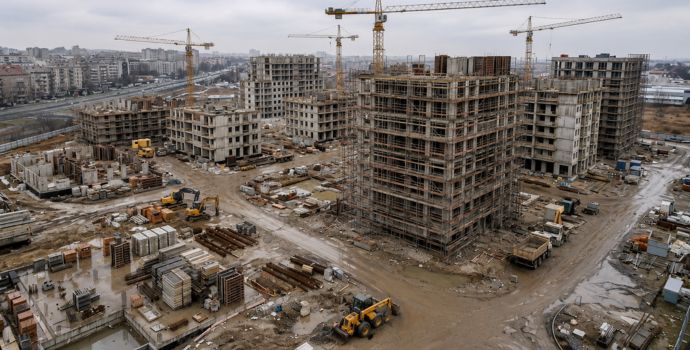
It’s not just the prices that have fallen—total real estate investment.
dropped by 16.2% in the first five months of 2026 compared to the same
period in 2025, moving the sector from a driver of growth to a major
economic drag.
Why the Collapse Has Lasted
This Long
Unlike a standard housing market correction, China’s downturn has
persisted for over five years without a clear recovery.
Several structural factors explain why.
First, there is a massive surplus of unsold housing.
Analysts estimate there is significantly more inventory than before.
the downturn, which limits any significant price recovery, even when
Demand starts to improve.
Second, buyer confidence is weak.
Many households are holding off, expecting prices to fall even further.
before making a purchase. This self-reinforcing cycle keeps sales low.
Third, confidence is not just about affordability.
Years of stalled projects and developer failures have made buyers
hesitant to pay in advance for homes that might never be completed.
Is the China Housing Market Going to Crash Further?
A sudden crash looks unlikely because officials are managing a slow decline rather than launching big stimulus, but S&P Global still expects prices to keep falling through 2026.
How Developers Are Coping
(Or Not)

The developers most affected are the ones that expanded rapidly during
the booming years, largely funded through offshore dollar bonds offering
high yields of up to 10%.
When financing became tighter and sales slowed, many of these firms
were unable to meet their debt obligations, triggering a wave of defaults
that began with Evergrande in 2021 and has continued since.
Even developers once regarded as relatively safe are now facing
pressure.
China Vanke, which has long been considered one of the more
disciplined major builders, shocked the market by proposing a delay in a
local bond payment—an indication that even the strongest financial
Positions in the sector are under strain.
Why Mortgage Risk Has Stayed Contained
Despite the turmoil among developers, China’s banking system has not
seen a matching surge in mortgage defaults.
The share of mortgage-related non-performing loans at major Chinese
Banks have only risen slightly and remain below 1%, mainly because
Chinese homebuyers historically make large down payments and carry
less debt compared to buyers in many Western markets.
How the China Property Crisis Affects Investors
The effects of the crisis have crossed China’s borders, affecting foreign
investors who sought high returns by investing in developer debt.
As more defaults occur, these investors have faced substantial losses.
Bonds that were previously valued close to their face value are now
trading at a much lower price across the entire sector.
For investors in broad emerging-market or Asia-focused funds, the
Exposure is often more extensive than anticipated.
The property and related industries once contributed nearly a third of
China’s GDP, so any weakness in this area can affect other sectors such
as steel, cement, home appliances, furniture, and local government
finances, which heavily rely on land sales for income.
Where the Risk Currently Lies
Developer bonds remain the most risky aspect, with many
Dollar-denominated notes are trading significantly below their face value.
Chinese equities, particularly those linked to property, continue to
underperforming indexes, although some sectors like technology and
Exports provide some balance. balance. For investors looking at opportunities beyond China’s property market, see our breakdown of NVDA stock and its $150 billion buyback plan.
Local government
Finances are also under strain due to declining land sales, which have reduced municipal budgets in many provinces.
Global banks and asset managers
have varying levels of exposure, with institutions that have heavy investments in China’s property lending or bonds experiencing write-downs.
Investor sentiment has become more cautious but not excessively.
worried.
Most major analysts believe a systemic banking crisis is unlikely due to
conservative mortgage lending practices, even though the property
The sector is expected to continue challenging GDP growth for some time.
Government Response and
Policy Changes

Beijing’s strategy has changed since the crisis began.
Initially, the focus was on providing emergency funding and lowering
interest rates. By 2025 and into 2026, the approach shifted towards
managed stabilization instead of strong stimulus.
Current actions include:
- Offering tax relief and adjusting mortgage conditions for buyers
- Relaxing local purchase restrictions in multiple cities
- Limiting the number of new projects to reduce inventory
- Converting unsold homes into subsidized or public housing
- Focusing on completing stalled projects rather than starting new
construction.
This marks a significant departure from the previous model of growth.
based on construction.
Instead of aiming to boost building activity, officials are now trying to
manage a gradual decline in an oversized market, a slower process
intended to prevent a sudden collapse.
China Real Estate Market Outlook for 2026
Most forecasts predict continued poor performance rather than a sharp
rebound.
Primary home sales are expected to drop another 10% to 14% in 2026.
and a full recovery remains uncertain even with more
decisive policy actions like large-scale housing buybacks.
There are some areas showing relative strength to watch.
Tier-1 cities, especially Shanghai, have shown signs of stability or slight
price increases, suggesting demand still exists, though it is concentrated
in fewer, stronger markets
. Investors now see the property sector in
China is more as a way to preserve capital than as a high-growth
opportunity, which is a major shift in how this asset class is viewed
globally.
Conclusion
China’s property market is not experiencing a single dramatic crash but
is going through one of the longest and deepest corrections a major
economy has seen in recent times
Prices continue to fall, developers keep defaulting, and the effects are
spreading to global bondholders, emerging-market funds, and industries
beyond real estate.
For investors, the key isn’t panic but precision.
Understanding where real exposure lies—particularly in developer
debt—not just mortgages—and where relative strength
remains—specifically in select tier-1 cities—is more crucial than ever. Found this useful? Share it with someone who tracks China in their portfolio, or tell us in the comments which angle to cover next.
FAQ
Will China’s property market keep falling in 2026?
Most forecasts say yes. S&P Global expects further price declines, and primary home sales are projected to drop another 10% to 14% in 2026.
How long will the China real estate crisis last?
There is no confirmed bottom yet. The downturn began in 2021, and forecasts point to weak performance rather than a sharp rebound. A recovery would likely need stronger policy support, such as large-scale housing buybacks.
How does the China property collapse affect global investors?
Foreign holders of developer dollar bonds have taken real losses. Emerging-market and Asia-focused funds also carry indirect exposure through property-linked sectors and Chinese equities.
What are the consequences for China’s economy?
Property and related industries once made up nearly a third of GDP. Real estate investment fell 16.2% in the first five months of 2026, which hurts steel, cement, appliances, and local government budgets that depend on land sales.
How far have China’s home prices fallen from their peak?
In many cities, prices are 40% to 50% below their peak. Across 70 major cities, new home prices fell 3.2% year-on-year in July 2026.