
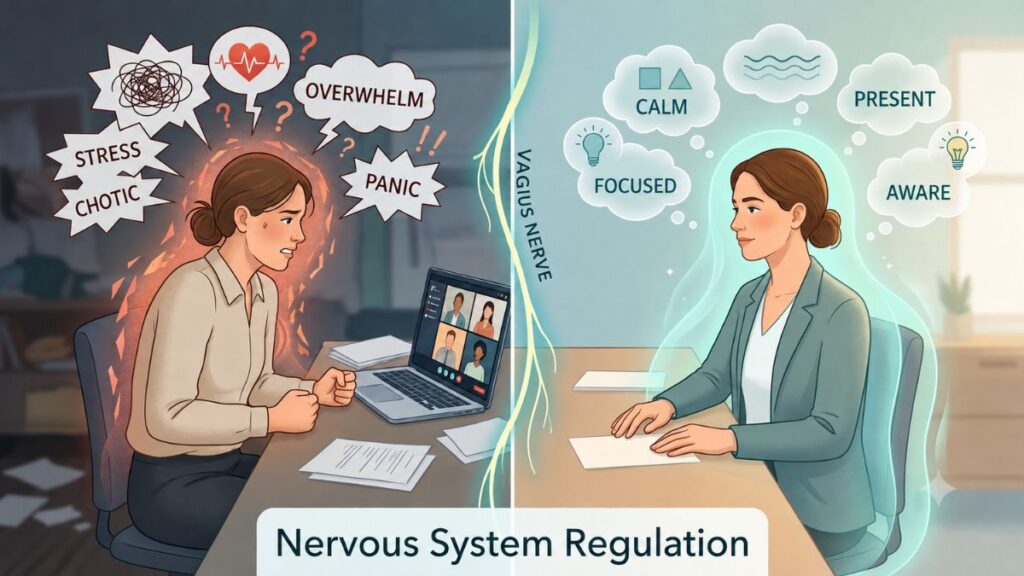
Your boss asks an unexpected question in a meeting. Your heart races. Your mind goes blank. Hours later, you still feel on edge even though the meeting ended at 2. This is not a sign of weakness. It’s your nervous system operating exactly as it was designed to—staying alert when it senses a possible threat.
The issue is that your nervous system cannot tell the difference between a real danger, like a lion, and a stressful situation, like a difficult email. Once it’s activated, it can stay active unless you clearly send a signal that everything is safe. Many common methods for regulating the nervous system don’t work because they treat your body as if it were the same for everyone.
Amanda from Regulated Living offers you 10 general micro-moments. Bridger Peaks Counseling lists 8 techniques without any context. Neither one explains why a technique works or when it should be used. Your nervous system doesn’t need a generic routine. It requires specific strategies that are tailored to the situation and how your body actually works.
Understanding the Three States of the Nervous System Regulation
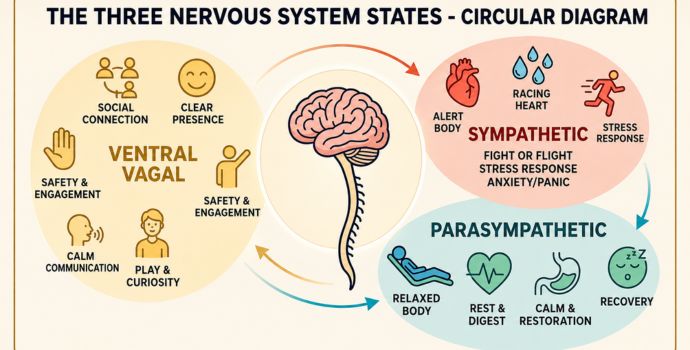
Before moving to specific strategies, you need to understand the basics. Your nervous system functions in three distinct states, not just two.
Sympathetic State (Fight-or-Flight): Your body is on high alert. Adrenaline and cortisol rush through your system. Your heart races, digestion slows, and your focus becomes narrow. This is useful for real emergencies. However, it becomes exhausting if it’s constantly active.
Parasympathetic State (Rest-and-Digest): Your body is relaxed. Your heart slows, digestion resumes, and your immune system improves. This is when you sleep, learn, and recover.
Ventral Vagal State (Social Connection): This is a state that many people overlook. According to polyvagal theory, developed by neuroscientist Stephen Porges, this is the highest level of nervous system functioning—available only when you feel truly safe. It’s why you can think clearly around people you trust, but you may freeze or shut down around authority figures.
Most regulation advice focuses on the parasympathetic state (rest). If you miss the ventral vagal state, you might never reach the calm that also includes social clarity and presence. This is especially important in the workplace.
Why General “10 Techniques” Don’t Work
When Regulated Living suggests you pick one technique and stick with it, they’re not considering an important fact: your nervous system’s capacity depends on your current state.
If you’re already overwhelmed (stuck in a sympathetic state), trying meditation is like asking someone who is scared to just “think calmly.” Your thinking brain doesn’t have much control when your survival brain is on high alert.
What you need is body-first intervention—breathing, movement, temperature, and vibration—before your mind can settle.
Your nervous system has a hierarchy of interventions based on how activated it is. Your plan should match your actual state, not your idealized one.
The Four-Situation Protocol Framework
Protocol 1: Morning Nervous System Calibration (5 minutes)
When: Within 30 minutes of waking, before checking your phone
Why it Matters: Your nervous system’s overall tone for the day is set in the first hour.
Morning cortisol is normal and useful—but it needs to peak and then decline. Screens, emails, and news prevent that decline. Your body’s stress response stays elevated.
The Protocol:
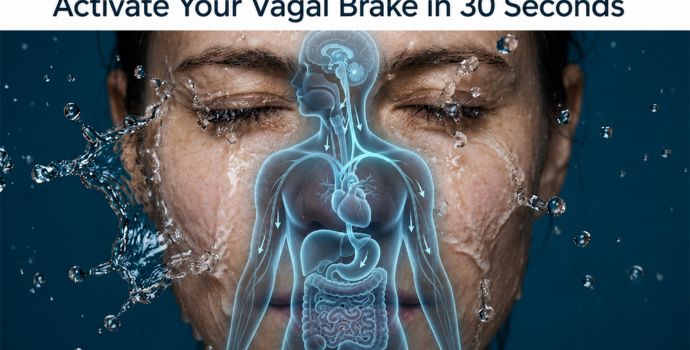
Apply cold water to your face or wrists for 30 seconds:
This triggers the mammalian diving reflex, which signals your vagus nerve to slow your heart rate immediately. Researchers at the University of Sheffield found that cold exposure activates the vagal brake more effectively than any breathing technique.
Gargle for 20–30 seconds.
Your vagus nerve is wrapped around your vocal cords. Gargling directly stimulates it without requiring you to cognitively “do” anything. Do this while showering or at the sink.
Get 10 minutes of sunlight exposure.
Not through a window—actual outdoor light. This helps reset your circadian rhythm. Your hypothalamus (your brain’s internal clock) reads morning light as “day is beginning,” which stabilizes your cortisol rhythm all day. Research from the Black Dog Institute found that 10 minutes of outdoor morning light reduces afternoon anxiety spikes by 30% in office workers.
Result: Your nervous system starts the day in a regulated, alert state—sympathetic awake, not dysregulated.
Protocol 2: Midday Stress Spike Reset (3 minutes, for emergencies)
When: After a stressful meeting, before a presentation, or during anxious thinking patterns
Your current state: Already highly activated, heart racing, mind scattered
Why generic breathing fails: If you’re dysregulated, slow breathing feels impossible.
Your body believes danger is still present. You can’t breathe your way out of this. You need to signal safety through your body first.
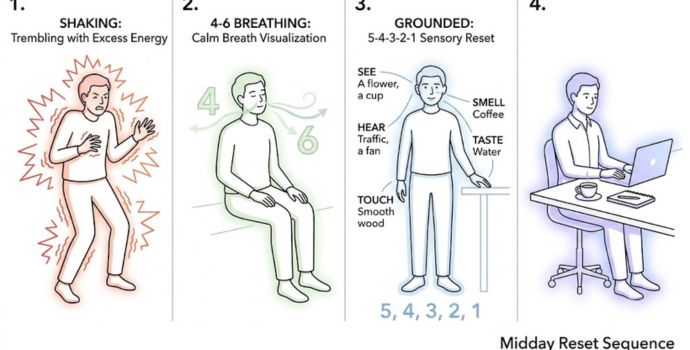
The Protocol (in order):
Shake or tremble for 20–30 seconds.
Stand up and let your body shake—arms, legs, and whole body. This is how animals naturally release tension after stress. Your sympathetic nervous system evolved expecting to run from danger. Once you move, it recognizes the threat has been handled. Shaking can shorten this process faster than anything. Personal trainers in Australia call this “nervous system discharge.”
Breathe in for 4 seconds and out for 6 seconds for 2 minutes.
Now, your nervous system is calmer, and your body can follow your breathing cues. Longer exhalations activate the parasympathetic nervous system through the vagus nerve. This works because you have already lowered your activation with movement.
Use the 5-4-3-2-1 grounding technique (if still activated).
Name 5 things you see, 4 things you touch, 3 things you hear, 2 things you smell, and 1 thing you taste. This engages your prefrontal cortex (thinking brain) and pulls you away from fear (triggered by the amygdala) back to the present moment.
Result: Within 3 minutes, your nervous system begins to recognize that the threat is gone.
Your thinking brain returns.
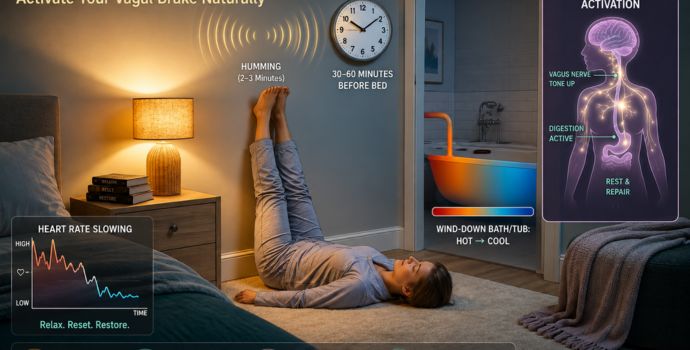
Protocol 3: Evening Sleep Preparation (10 minutes, 30–60 minutes before bed)
When: After work stress continues into the evening, or when you feel wired before bed
The Challenge: Dysregulation in the evening can block sleep.
You may not be tired—you’re just tired. Melatonin won’t help if your nervous system doesn’t feel safe.
The Protocol:
Take a warm shower or bath.
Warmth initially raises body temperature, but then the sudden drop signals your nervous system that rest is coming. This mimics the natural temperature drop that triggers sleep. Sleep researcher Matthew Walker from the UK emphasizes that temperature regulation is more effective than melatonin supplements.
End your shower with 20–30 seconds of cold water.
The contrast in temperature signals vagal activation, which means safety and calmness.
Lie in the legs-up-the-wall pose for 5 minutes.
Sit on the floor with your legs up against a chair or wall. This inversion slows your heart rate through gravity and pressure changes. It’s not yoga—it’s physiology. Your vagus nerve runs from your brain to your abdomen. Inverting changes blood pressure gradients, which stimulates parasympathetic activation.
Hum or sing for 1–2 minutes.
Vocalization activates the vagus nerve’s pharyngeal branch. One minute of humming before bed can significantly increase heart rate variability, an important sign of nervous system flexibility.
Avoid screens for 30 minutes after this.
Blue light hinders melatonin production, but more importantly, scrolling reactivates your sympathetic nervous system. system. You have just been downshifting; do not restart the stress response.
Result: Your nervous system is in parasympathetic dominance.
Sleep becomes possible.
Protocol 4: Acute Anxiety or Emotional Overload (Emergency Use)
When: Panic, severe anxiety, overwhelm, or emotional dysregulation
Your current state: Maximum.
You are barely able to think.
Why this works: You are bypassing thought and working directly with your physiology.
The Protocol (30–60 seconds total):
Spray cold water on your face for 10–15 seconds.
This is one of the strongest ways to stimulate the vagus nerve. It can briefly make your heart skip or pause, breaking the cycle of panic. Emergency responders in Canada use this method because it works quickly and doesn’t require talking.
Hold this position for 10 seconds.
Maintain stillness while your face is wet. This activates your body’s diving reflex.
Stand up slowly and move around for 2 minutes.
Gentle activity helps your body finish the response of being alert, showing it that the threat is gone.
If you’re still feeling very activated, try box breathing. Inhale for 4 seconds, hold for 4, exhale for 4, and hold for 4.
Repeat this four times.
Why this is better than meditation apps: You’re not asking your anxious brain to think clearly. Instead, you’re using your body’s survival instincts directly.
The Science of Why These Work: Polyvagal Theory Explained Simply
Your vagus nerve acts as the main communication line in your nervous system, connecting your brain to your heart, lungs, and digestive system.
Your “vagal tone” is how well your nervous system can move between states of being alert and calm.
High vagal tone means your nervous system is flexible—you can shift from being alert to calm depending on the situation.
Low vagal tone means your nervous system is stuck.
You may be too alert or too dull, which is not a good balance.
The methods above work because they directly stimulate your vagus nerve:
Cold water: Helps activate the parasympathetic nervous system through the diving reflex.
Humming, singing, or gargling: These activities stimulate the vagus nerve through vibrations in the throat.
Movement: Helps your body finish the full cycle of being alert so it can recognize that it is safe.
Long exhales: Help activate the vagus nerve’s “brake,” which encourages relaxation.
Grounding techniques: Help activate your brain’s higher areas, which reduces the emotional dominance of your amygdala, the part of the brain that controls fear.
If you consistently use these techniques over 2–3 weeks, your nervous system becomes more flexible.
Stressors that made you feel overwhelmed previously now cause only minor responses.
Common Mistakes That Sabotage Results
Mistake 1: Using calming techniques when you are already overactive.
Meditation won’t help if your body is in a high state of alert.
Use a shaking method or a cold face wash first. Calmness follows, not precedes, the relaxation process.
Mistake 2: Believing that one technique can work forever.
Your nervous system becomes used to repeated inputs.
The cold shower that worked in January might not feel as effective by March. Vary your methods to keep them effective.
Mistake 3: Doing these techniques one time and expecting long-term results.
Regulation is like exercise.
One workout doesn’t build muscle. One meditation session doesn’t rewire your nervous system. Consistency over a few weeks brings real change. Daily practice is essential.
Mistake 4: Assuming you are broken if you still feel anxious.
Regulation isn’t about eliminating stress.
You will still feel stress, but the goal is that you recover from it faster. You won’t spiral into a constant state of anxiety.
When These Techniques Aren’t Enough
If you’re practicing these each day and still
- Have trouble falling asleep despite using these techniques
- Experience panic attacks multiple times a week
- Have persistent thoughts that don’t go away
- Feel detached from your body
You may need professional help.
These techniques are the foundation, not a substitute for therapy, psychiatric care, or medical evaluations. If you have trauma, depression, or severe anxiety, regulation alone cannot address the underlying issues.
Frequently Asked Questions
Q: How long before I notice results?
A: Cold water, shaking, and movement can give results in 2–5 minutes.
Doing these techniques every day, both in the morning and the evening, helps your nervous system become more flexible in 2–3 weeks. You will notice faster recovery from stress, better sleep, and a reduction in your usual anxiety level.
Q: Do I have to do all four protocols, or can I choose one?
A: Start with the morning routine (5 minutes).
This sets the tone for the rest of your day. After a week, add the evening routine. Emergency techniques are for urgent situations only. The morning and evening routines form the foundation of your practice.
Q: Can I do these at work without drawing attention?
A:
- Cold water: Needs a sink
- Shaking: Use a bathroom stall or supply room for 30 seconds
- Breathing (4-in, 6-out): Invisible, just looks like normal breathing
- Grounding (5-4-3-2-1): Not noticeable at all; you’re just noticing things
- Humming: Can be done in a private office, car, or bathroom
Most techniques are easy to do discreetly.
Only the full-body shaking might need a little privacy.
Q: What’s the difference between this and meditation?
A: Meditation is about trying to control your thoughts to influence your body.
Regulation is about using your body’s responses to influence your mind. You can’t meditate effectively when you are very stressed. Regulation techniques work regardless of your mental state. They act faster and work for everyone.
Q: I have PTSD or trauma.
Will these help?
A: These methods can help reduce acute stress, but trauma requires specialized treatment (like EMDR, somatic experiencing, or trauma-focused CBT).
Use these techniques alongside professional help, not as a replacement.
Q: Which technique is “best”?
A: The one you’re most likely to use consistently.
The best results come from daily use, not from using the perfect technique. Cold water is the most powerful. Gargling is the easiest. Shaking is the fastest. Choose based on your lifestyle, not theory.
Q: Can I combine techniques?
A: Yes. The morning routine includes cold water, gargling, and sun exposure. The emergency routine includes cold water, shaking, and breath control. Combining these techniques amplifies their effects compared to using them alone.
References
- Polyvagal Institute — “What is Polyvagal Theory?”
- Stephen Porges — Books page (official site)
- Harvard Health — “Understanding the Stress Response“
- Harvard Health — “Relaxation Techniques: Breath Control Helps Quell Errant Stress Response”
- Gerritsen, R. & Band, G. (2018). “Breath of Life: The Respiratory Vagal Stimulation Model of Contemplative Activity.” Frontiers in Human Neuroscience.
- Wikipedia — “Vagal Tone”
